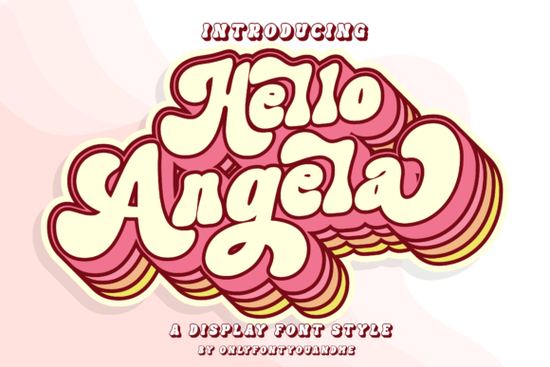
If you need a display typeface that catches the eye without feeling overworked, Hello Angela Font delivers exactly that. It’s a fun, highly readable display font built for projects that need a clear personality. Whether you design printable wall art, run a small boutique brand, or create listings for print-on-demand marketplaces, this typeface gives you clean lines and playful alternates that adapt to different layouts.
What makes this display font stand out?
The real strength lies in how it balances structure and charm. Display fonts often lean too heavy or too decorative, but this one keeps a steady rhythm that works at larger sizes. The letterforms have enough contrast to feel lively, yet they stay legible when scaled down for packaging labels or social media graphics. You also get full PUA encoding, which means every alternate character, swash, and glyph is accessible directly through your design software. No extra plugins or workarounds needed.
For crafters and small business owners, that technical detail matters. When a font is properly encoded, you can open the glyph panel in Illustrator, Photoshop, or Cricut Design Space and swap characters in seconds. It saves time during busy production weeks and keeps your branding consistent across different products.
Where does it work best in real projects?
This style shines when you give it room to breathe. I’ve found it performs reliably in a few specific areas:
- Headlines and cover titles that need instant visual weight
- Brand logos and wordmarks where a friendly tone matches the business vibe
- Print-on-demand apparel that relies on bold, readable typography
- Magazine layouts that pair a statement header with cleaner body text
- Event signage that benefits from subtle alternates and ligatures
Because the character set includes multiple alternates, you can tweak the same word to look completely different across a product line. That flexibility helps sellers avoid repetitive mockups and gives boutique owners a custom feel without hiring a lettering artist.
How do PUA encoding and alternates actually help?
PUA encoding simply maps every special character to a standard Unicode slot. In practice, your software recognizes swashes and decorative endings as regular selectable glyphs. You click, swap, and move on. For designers who juggle multiple client files, that reliability reduces friction. You won’t waste time hunting for missing characters or dealing with broken text boxes when switching between operating systems.
If you work with cutting machines, the encoded alternates also export cleanly to SVG or PNG formats. Just isolate the modified word, outline the text, and send it to your cutter. The paths stay smooth, and the blade follows the curves without jagged edges.
What should I pair it with?
A display font only works well when the supporting typefaces step back. I usually match it with a neutral sans serif for body copy, or a light serif when the project calls for a softer editorial look. If you want to explore other display options for contrast, you might browse a retro-inspired collection when you need that worn, nostalgic texture. For layouts that demand a smoother, liquid feel, checking out a fluid lettering style can add nice variety to your toolkit.
When your design leans toward a more structured mood, a clean block typeface often balances the playful curves nicely. Seasonal projects also benefit from mixing in a botanical display option or a light seasonal script to keep the overall composition fresh. The key is to let the main headline carry the personality while everything else stays quiet.
How to install and use it without hassle?
Installation follows the standard workflow for desktop fonts. Download the zip file, extract the OTF or TTF folder, and double-click to install. Once it’s active, restart your design program so the glyph panel refreshes properly. When you start laying out text, keep these quick adjustments in mind:
- Increase tracking slightly if the word feels too tight at large sizes
- Test alternates on the first and last letters first, then add middle swashes only if they improve readability
- Export a test print at 100% scale before committing to bulk production
- Convert to outlines before sending files to printers or cutting software
Ready to put it to work?
Before you launch your next design, run through this quick checklist to save time and avoid reprints:
- Confirm the font is fully installed and visible in your software’s glyph panel
- Choose one or two alternates per word to keep the layout clean
- Pair with a simple supporting typeface and check contrast at mobile size
- Export a high-resolution test file and verify spacing on paper or fabric
- Save a master editable file and a separate outlined version for production
Stick to this routine, and you’ll get consistent results across digital mockups, physical prints, and cut files. The font does the heavy lifting; your job is just to guide it into the right space.
Try It Free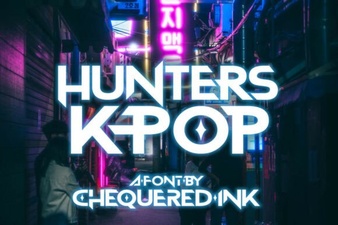 Hunters Font: Creative K-Pop Design Ideas
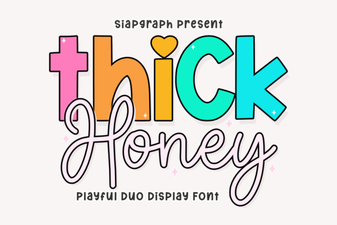 Thick Honey Duo Font for Creative Projects
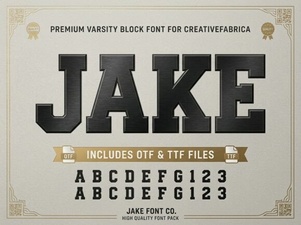 Jake Font: Creative Design Projects & Download Guide
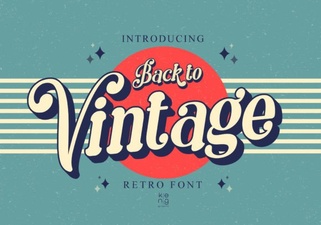 Vintage Fonts for Modern Design Projects
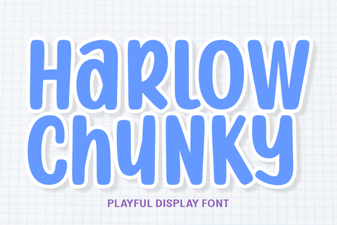 Harlow Chunky Font: Design Projects & Inspiration
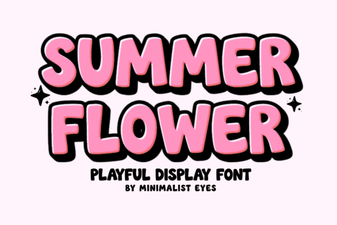 Fresh Fonts for Summer Flower Designs & Crafts